 Morina Gael
 Let’s be real most of us spend our days half-attached to a chair, whether we’re hammering away at spreadsheets or doing the whole binge-watching thing for the newest hits. And sure, your chair might feel like some kind of throne, but your body reads it like a “shut down” signal. So yeah, here’s what tends to go down when you stay parked for way too long, kind of without even noticing.
Muscle “Hibernate” Mode

The second you sit, the muscles in your lower body, especially the glutes and legs go quiet. Since they aren’t actively stabilizing you, their electrical activity drops to basically nothing. It’s like they scheduled an “unplanned sabbatical” and didn’t really tell you.
The Metabolism Slump
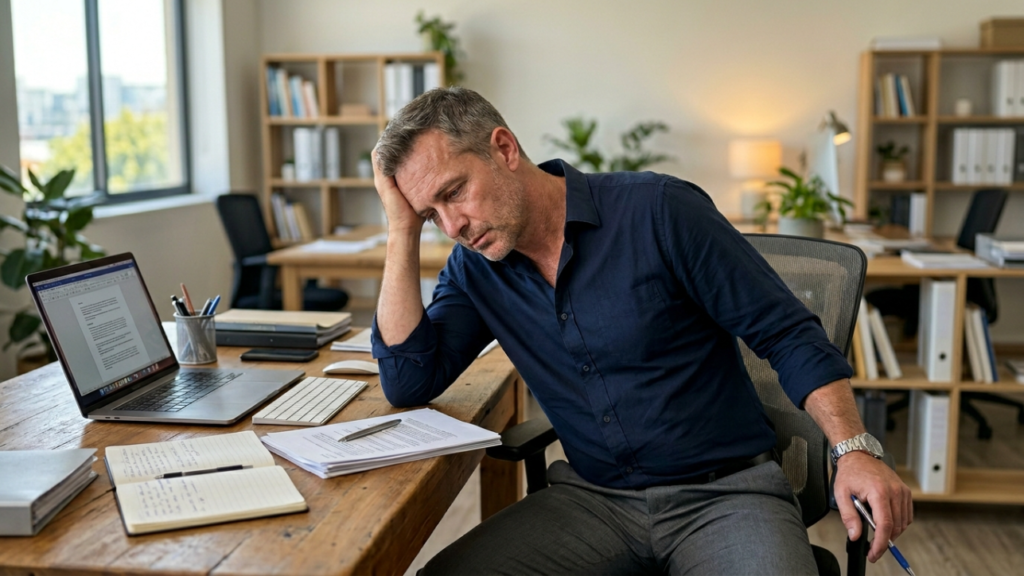
Moving is the ignition for your internal machinery. When you don’t, your body’s ability to handle fat starts to tank. In particular, an enzyme called lipoprotein lipase, which normally grabs fat from your blood and helps use it for energy, slows down hard. Then the “fuel” you ate is harder for your system to deal with.
The Posture Pivot, aka Gravity’s Favorite Trick
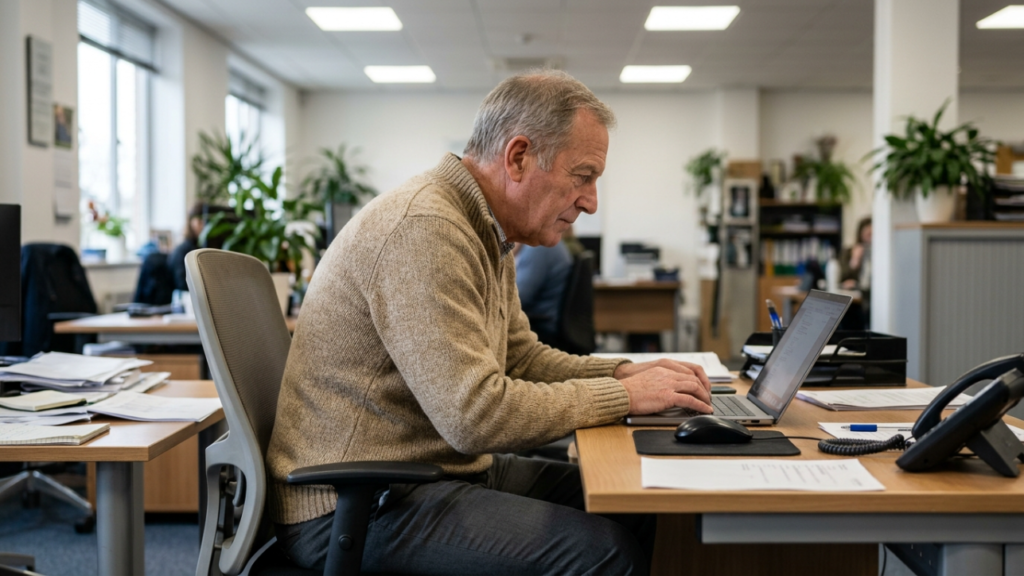
Gravity is always there, being annoying and correct. Sitting often nudges your pelvis into a backward tilt, and that flattens the natural curve in your spine into more of a rounded “C.” This can crank up pressure on your spinal discs and overstretch the ligaments, and suddenly you’re dealing with tech neck plus that lower back grumpiness you didn’t ask for.
Blood Flow in Slow-Mo
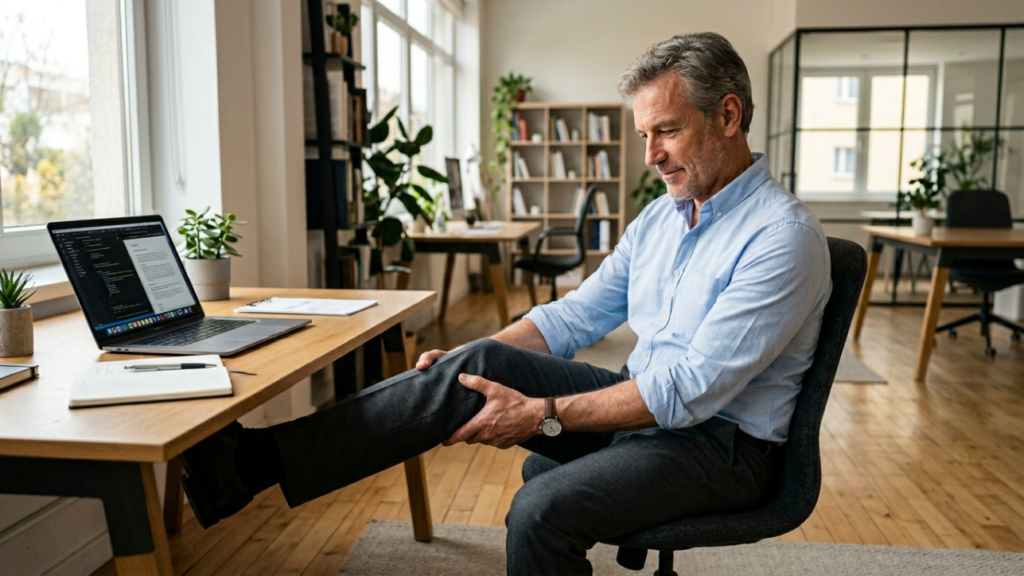
Without the leg “muscle pump” that normally helps push blood back toward your heart, circulation slows down. Gravity wins, and fluid starts to linger around your ankles and by the end of the day that can mean puffy feet and that heavy and sluggish feeling you just want to shake off.
Brain Fog Density
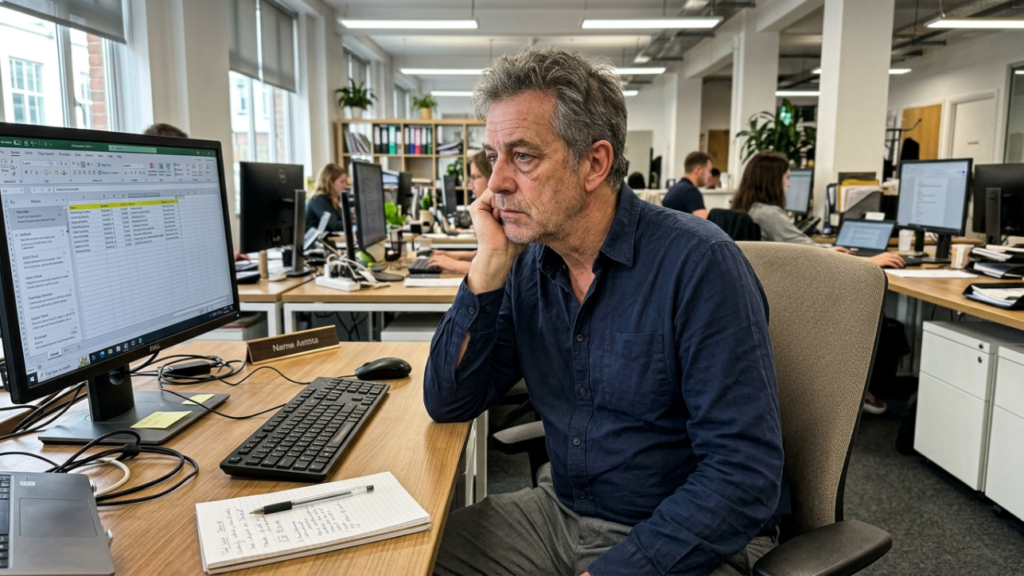
Your brain prefers fresh, oxygen-rich blood, something movement helps deliver. Sitting for hours can bring on a real mental fog. Without regular motion to nudge circulation and trigger those brain-supporting chemicals, your attention may start wandering into the afternoon boredom abyss.
The Insulin Interruption
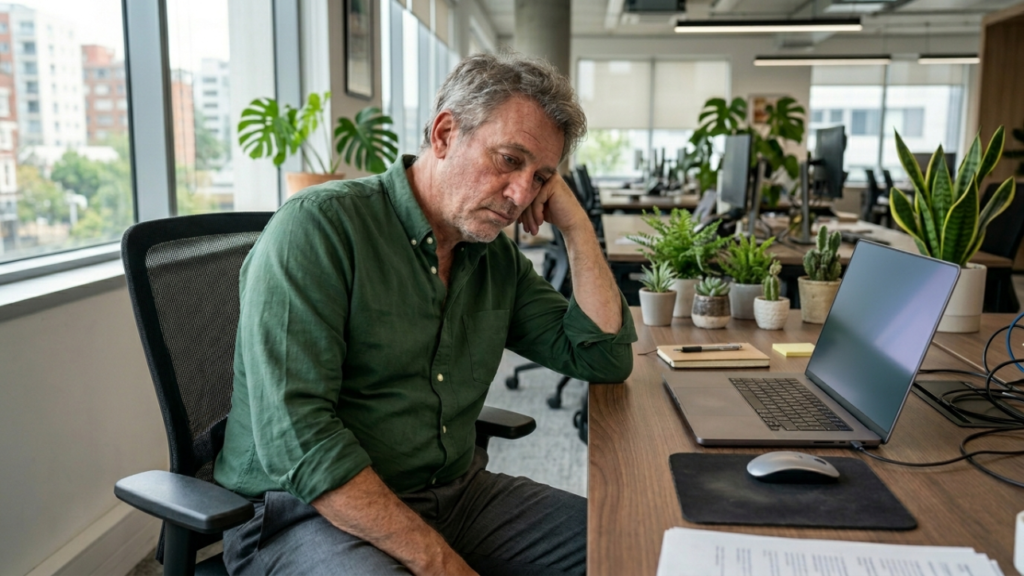
When you aren’t moving your cells get a little less responsive to insulin, kind of like they’re not as “welcoming” as usual and even prolonged sitting for just one day can reduce insulin sensitivity, so your body has to work more to manage blood sugar than it would if you were up and about.
Hip Flexor Tightness
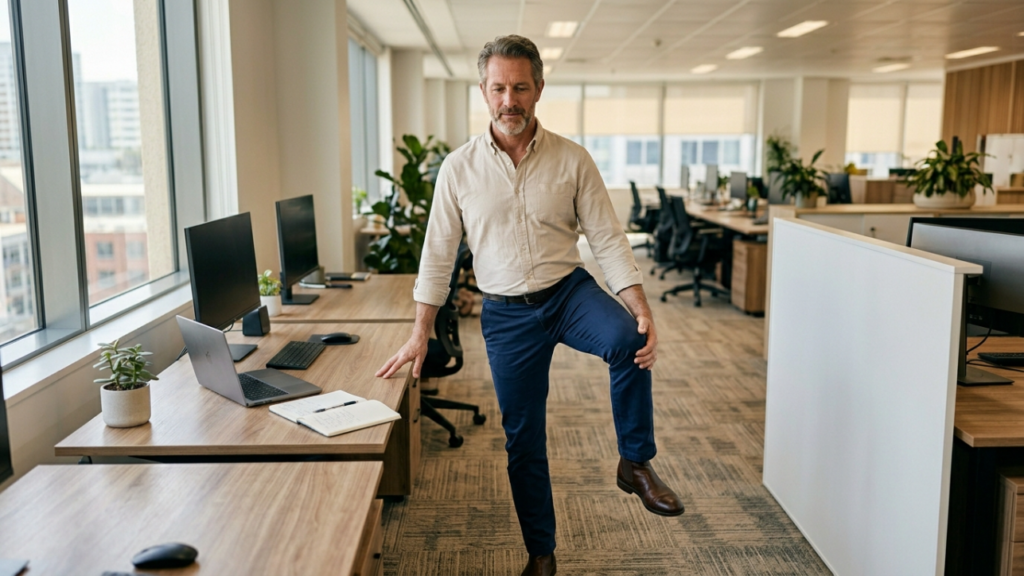
Sitting keeps your hips in a bent, flexed position and over time, the hip flexors shorten and tighten up. Then when you finally stand, those tight muscles tug on your pelvis and that’s often why your lower back feels like it survived a long flight or a rough workday.
The Heart’s Quiet Time

Your cardiovascular system is built for effort, not constant couch duty. When you sit for too long, your heart rate stays in a low “resting” zone longer than it should, which means the heart muscle doesn’t get the rhythmic “work” it needs to stay sharp and efficient. It’s like a performance engine running only for quick errands, you know?
Bone Density Dilemma
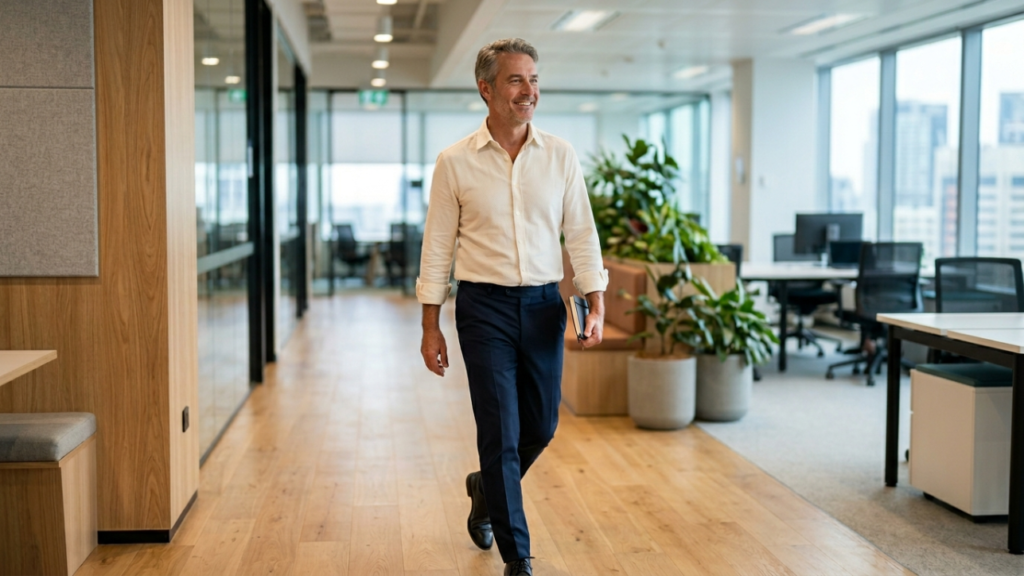
Bones are living tissue and they adapt to load well. Weight-bearing actions like walking or standing tell your body to “keep these bones strong.” But if sitting is your main routine, that “build and reinforce” cue goes quiet, which isn’t great for long-term structural strength.